The Horse Box Doctor
Your Horse Box One-Stop Shop

Horse transport, whether by trailer or commercial van, subjects equines to unique risks that multiply exponentially when equipment is faulty, poorly maintained, or structurally compromised. Research reveals that transport-related injuries are alarmingly common—studies show approximately 25 percent of horses sustain injuries during transportation, with 45 percent of transport-related problems being traumatic rather than medical in nature. Understanding the spectrum of potential injuries is essential for horse owners, trainers, and transport operators.
The most frequently documented injuries involve the lower limbs. Over half of transport injuries affect the lower limbs, with hind limbs accounting for 33.9 percent and forelimbs for 22.6 percent of reported cases. These injuries typically result from horses losing balance during transit, particularly when trailers brake suddenly or navigate turns.
Protruding screws, splintered wood panels, sharp metal edges on damaged dividers, and deteriorating rubber floor mats create constant hazards. Horses that scramble to maintain balance—the most commonly observed behavior during transport—repeatedly strike their legs against stall walls and partitions. While superficial lacerations may appear minor initially, horses are prone to developing exuberant granulation tissue (proud flesh) in lower limb wounds, which can result in permanent scarring and extended healing times.
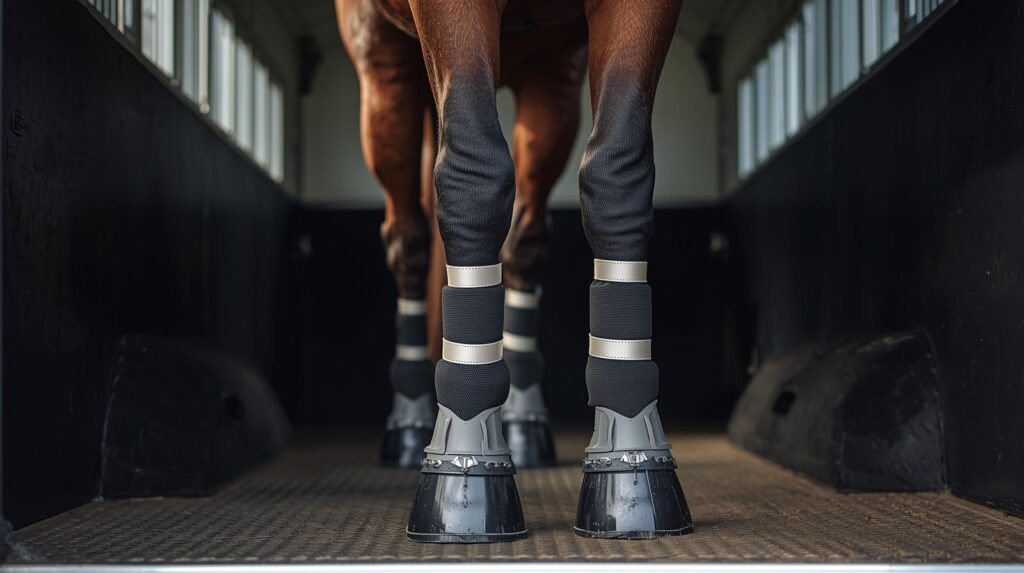
Research indicates that protective leg wraps and boots, while intended to prevent injury, can paradoxically increase injury risk if improperly applied or if horses are unaccustomed to wearing them. Protections that slip during transit can create pressure points or become entanglement hazards themselves.
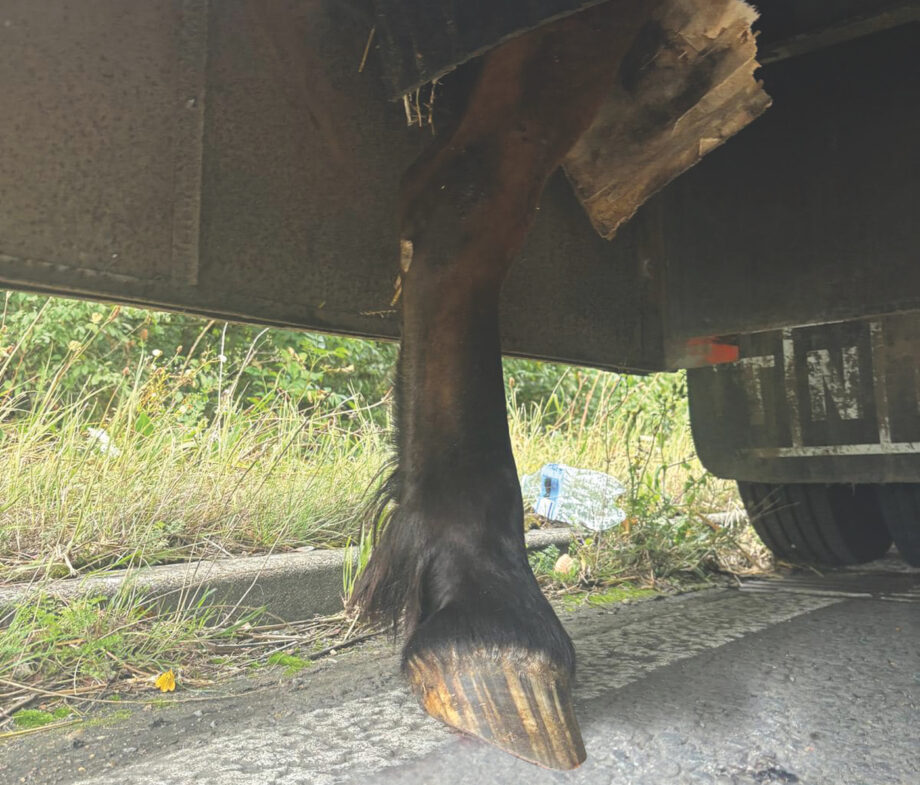
The horse in this image was not injured after his hind leg broke through the weakened floor of his horse box.
This type of injury is common where horse box floors have deteriorated and weakend over time.
Injuries like this can vary from mild to catastrophic.
Head and muzzle injuries account for 14.5 percent of transport injuries, while chest injuries comprise 9.7 percent and flank/hindquarter injuries another 9.7 percent. These typically occur when horses lose their footing and are thrown against trailer walls, roof braces, or partition dividers.
Damaged or improperly secured head dividers pose particular risks. Horses that throw their heads during transit can strike broken latches, exposed bolts, or splintered wood. Chest injuries frequently result from horses being thrown forward during emergency stops, particularly in straight-stall configurations where horses face the direction of travel.
Most injuries—83.6 percent—occur while the loaded transportation vehicle is moving, with scrambling during cornering being the primary behavioral cause. Horses possess a natural instinct to spread their legs for stability, but the confined space of transport boxes limits this ability. When trailers accelerate, decelerate, or turn, horses must constantly adjust their balance.
Faulty or worn suspension systems in older trailers exacerbate this problem by creating unpredictable movements that horses cannot anticipate. Research shows that transporting horses in older trailers significantly increases the risk of injury. The cumulative effect of repeated scrambling episodes can result in:

Eleven percent of transport injuries are caused by mechanical failure of trailer components. Critical failure points include:
Floor and Ramp Deterioration: Rotted floorboards or weakened ramps can collapse under a horse’s weight, causing legs to plunge through. Such incidents frequently result in severe lacerations, tendon damage, or fractures as horses struggle violently to free themselves.
Partition and Divider Collapse: Dividers that fail during transit allow horses to shift laterally, potentially causing them to fall or become wedged. In multi-horse transport, a collapsed divider can lead to horses fighting or trampling each other.
Ventilation and Heat Stress: Faulty ventilation systems, particularly in enclosed vans, can create dangerous temperature conditions. Horses generate substantial body heat, and inadequate airflow in compromised transport boxes can lead to heat stroke, respiratory distress, and exhaustion, which themselves increase injury risk as horses become disoriented.
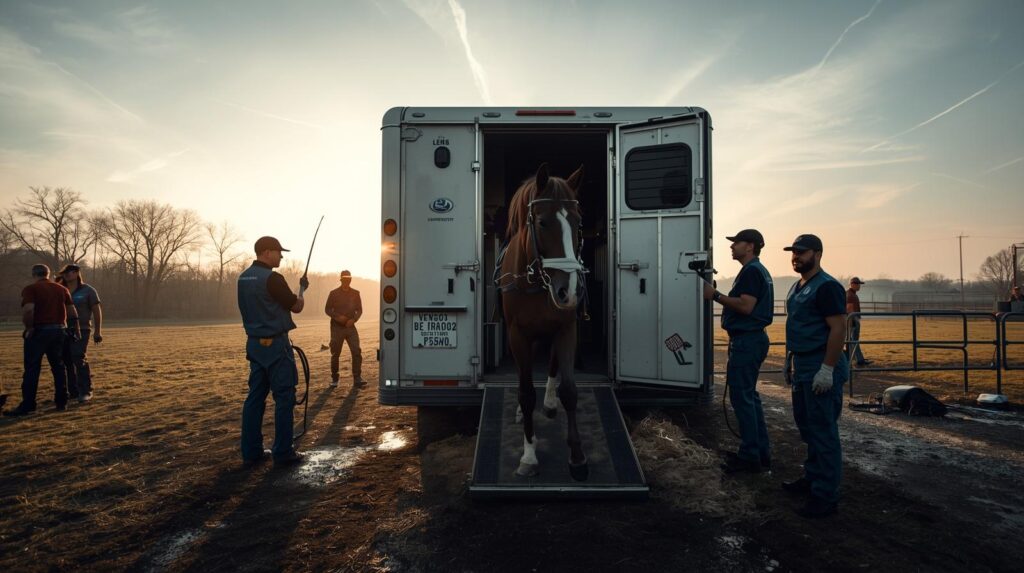
While only 7.3 percent of injuries occur during unloading and 3.6 percent during loading, these incidents often prove more severe than in-transit injuries. Damaged or improperly maintained loading ramps pose catastrophic risks:
Fractures represent the most devastating transport-related injuries. When horses lose their footing in moving trailers, the combination of confined space, vehicle momentum, and panic creates perfect conditions for limb fractures. Common scenarios include:
Pastern and Coffin Bone Fractures: These occur when hooves become trapped in deteriorated floor gaps or broken mats while the horse’s body continues moving with the trailer’s momentum.
Cannon Bone Fractures: Result from horses kicking violently against solid walls when panicked, particularly if trailer sway causes them to strike at awkward angles.
Catastrophic Long Bone Fractures: The most devastating injuries occur during accidents when trailers overturn or crash. Horses thrown against walls or crushed by shifting weight often sustain femoral, tibial, or humeral fractures that are not survivable.
The prognosis for fractured limbs in horses remains poor. Weight distribution requirements mean horses cannot easily compensate for non-weight-bearing limbs, and the confined space required for healing often proves psychologically intolerable for prey animals. Many fractures sustained during transport result in immediate euthanasia decisions.
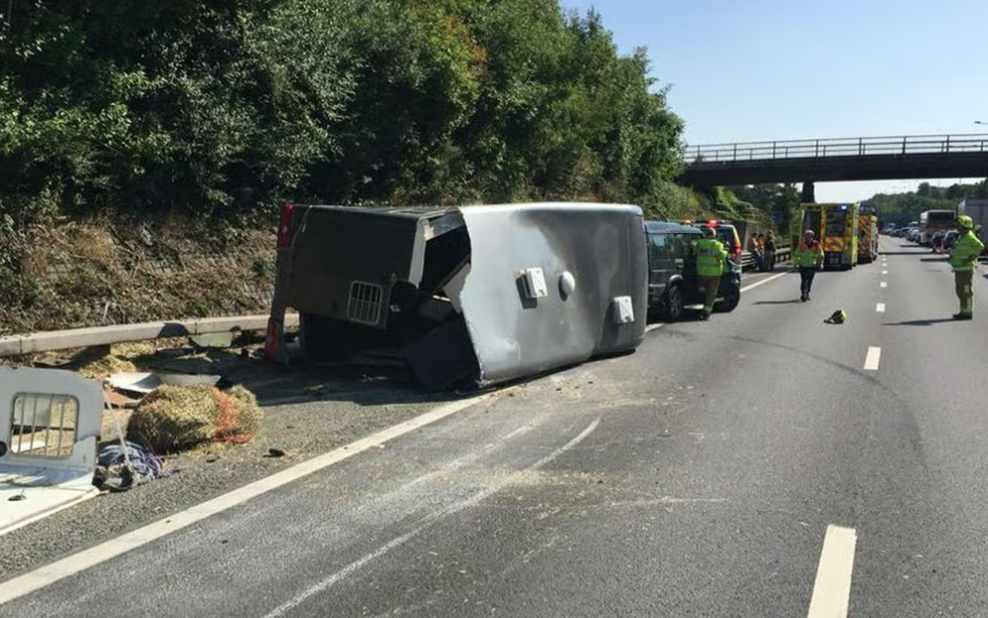
This accident happened on the M25 in Birmingham in 2016.
The horses in this accident were unharmed.
In a March 2024 in Nelson County , Kentucky, seven Thoroughbreds were killed or injured when a transport driver allegedly fell asleep after driving more than 11 hours, causing the trailer to careen off the road on the Bluegrass Parkway. This incident, which resulted in a $3 million lawsuit, illustrates the catastrophic potential of transport accidents.
When trailers overturn or crash, horses suffer:
Rescue operations following serious transport accidents can take approximately four hours, during which trapped horses endure extreme stress and progressive injury from struggling.
Perhaps the most horrifying transport injuries involve horses becoming entangled in broken tie systems or collapsed hay nets. Damaged quick-release snaps that fail to release, frayed lead ropes caught on protruding hardware, or broken breakaway ties that don’t break can result in horses hanging themselves during panic episodes. These incidents are almost always fatal.
Research has identified multiple factors that increase injury risk beyond simple equipment failure:
Trailer Type: The ubiquitous two-horse straight “bumper pull” trailer is associated with elevated risk of transport-related injuries compared with horse vans and gooseneck trailers, likely due to less stable handling characteristics.
Horse Orientation: Studies suggest facing horses backward (opposite the direction of travel) reduces injury risk, as horses lose balance more easily when facing forward, particularly during abrupt stops.
Driver Behavior: Horses transported by drivers who spoke on mobile phones while driving were more likely to sustain injuries, highlighting how driver distraction compounds risks created by faulty equipment.
Tranquilizer Use: Sedated horses show increased injury rates, as tranquilizers affect proprioception and balance, making horses more likely to fall, especially when trailer defects create unexpected movements.
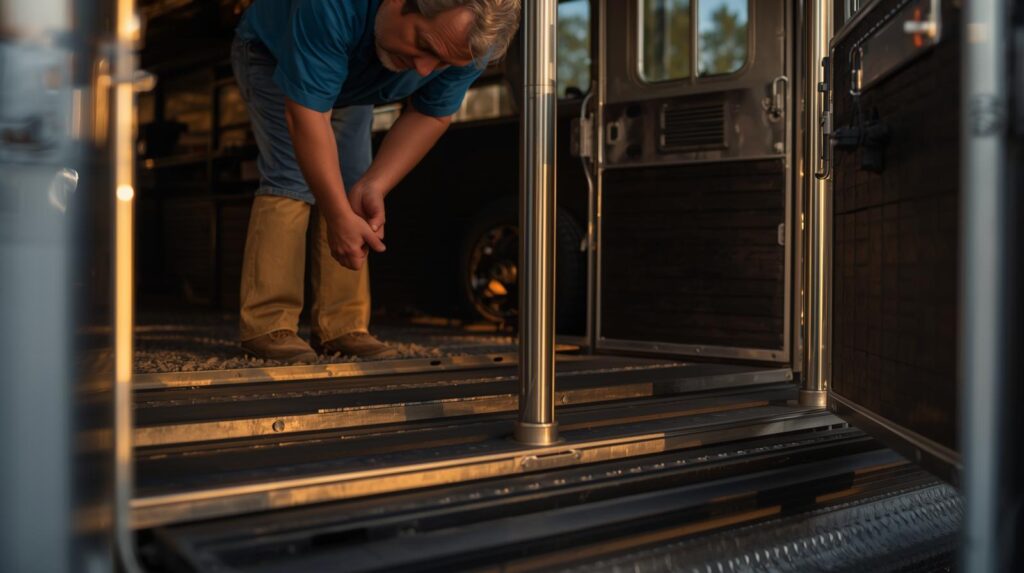
The documented frequency of transport injuries underscores the critical importance of rigorous equipment maintenance. Regular inspection of floors, partitions, latches, ramps, ventilation systems, and tie rings is not merely good practice—it is essential for equine welfare and legal liability protection.
Transport operators bear significant responsibility for equipment safety. Legal cases demonstrate that courts scrutinize whether operators knew or should have known about equipment defects, with settlements reaching millions of dollars when negligent maintenance contributes to injuries.
Injuries to horses from faulty or damaged transport boxes range from minor abrasions to fatal trauma. The combination of confined spaces, vehicle movement, and horses’ natural flight responses means that small equipment failures can cascade into catastrophic incidents. Given that approximately one in four horses sustains transport injuries and that most occur during routine transit rather than loading, the imperative for meticulous transport box maintenance cannot be overstated. For horse owners and operators, the investment in proper equipment maintenance and replacement represents not merely financial prudence but a fundamental obligation to equine welfare and safety.